Self-Study Learning Methods: Insights by Dr. Sandeep Kharat
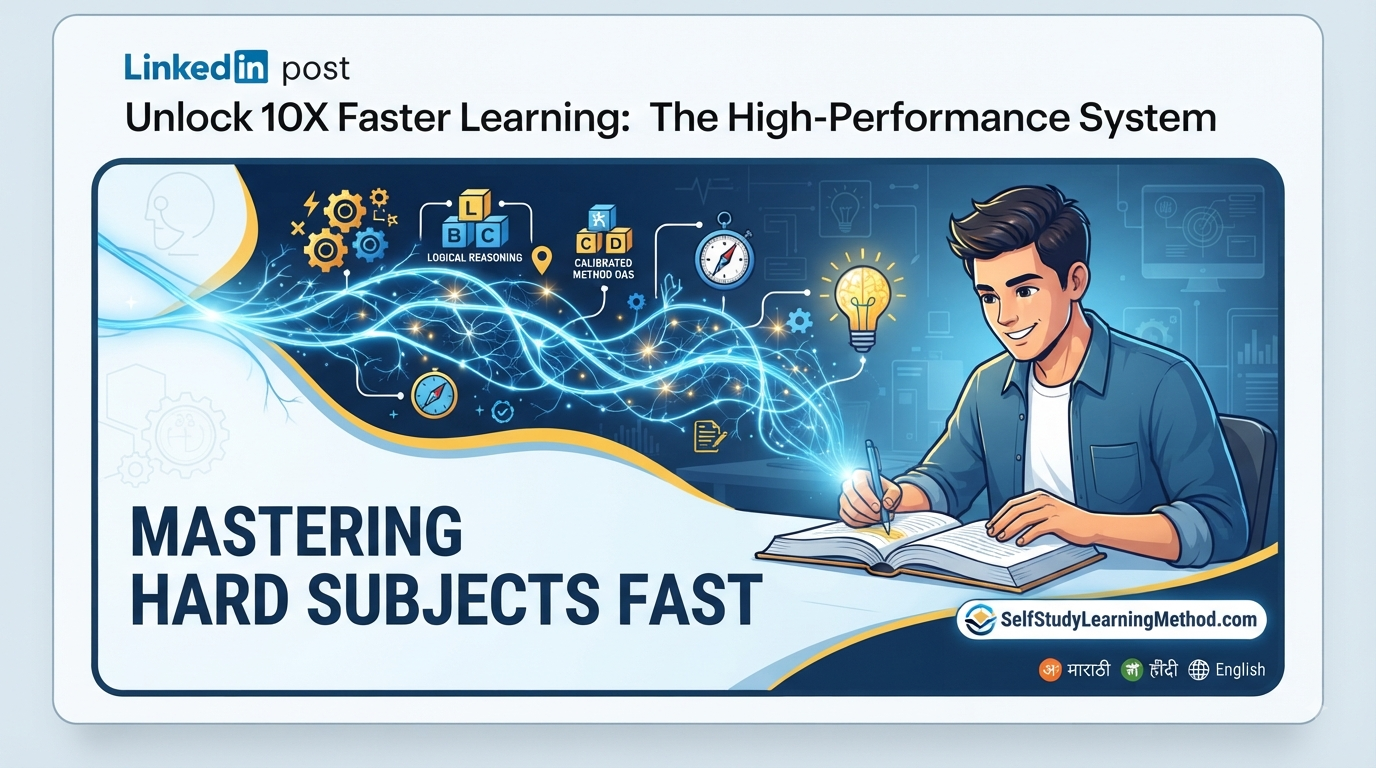
Struggling to Focus? Master Hard Subjects 10x Faster with Dr. Sandeep Kharat's Methods
Ever stared at a textbook for hours, feeling like your brain is moving in slow motion? You are not alone. Most students struggle with the exact same roadblocks: boring chapters, concentration crashes, heavy language barriers, and a total lack of chapter structure comprehension.
What if you could flip the switch and learn 10 times faster?
Let's dive into what real learning looks like, how to shatter your study barriers, and the high-performance system to get you there.
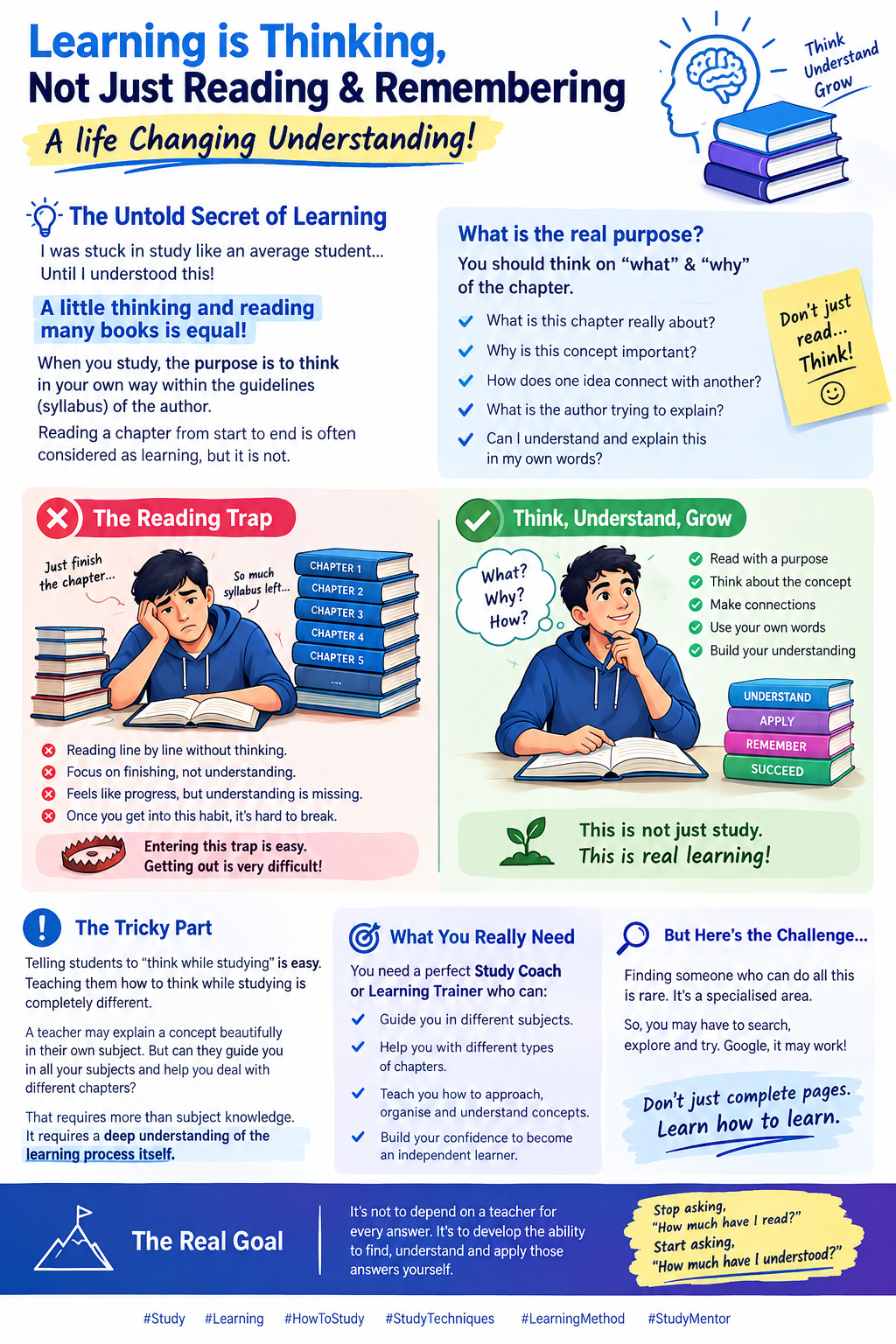
Rethinking What "Studying" Actually Means
True studying isnโt about cramming information just to regurgitate it in an exam or pass a multiple-choice test. Reading means fully understanding concepts.
Education operates on three powerful levels:
- The Foundation: Grasping and understanding core concepts.
- The Application: Knowing how to use those concepts or build applications out of them in everyday life.
- The Innovation: Solving existing problems, modifying systems, and creating brand-new solutions where gaps still exist.
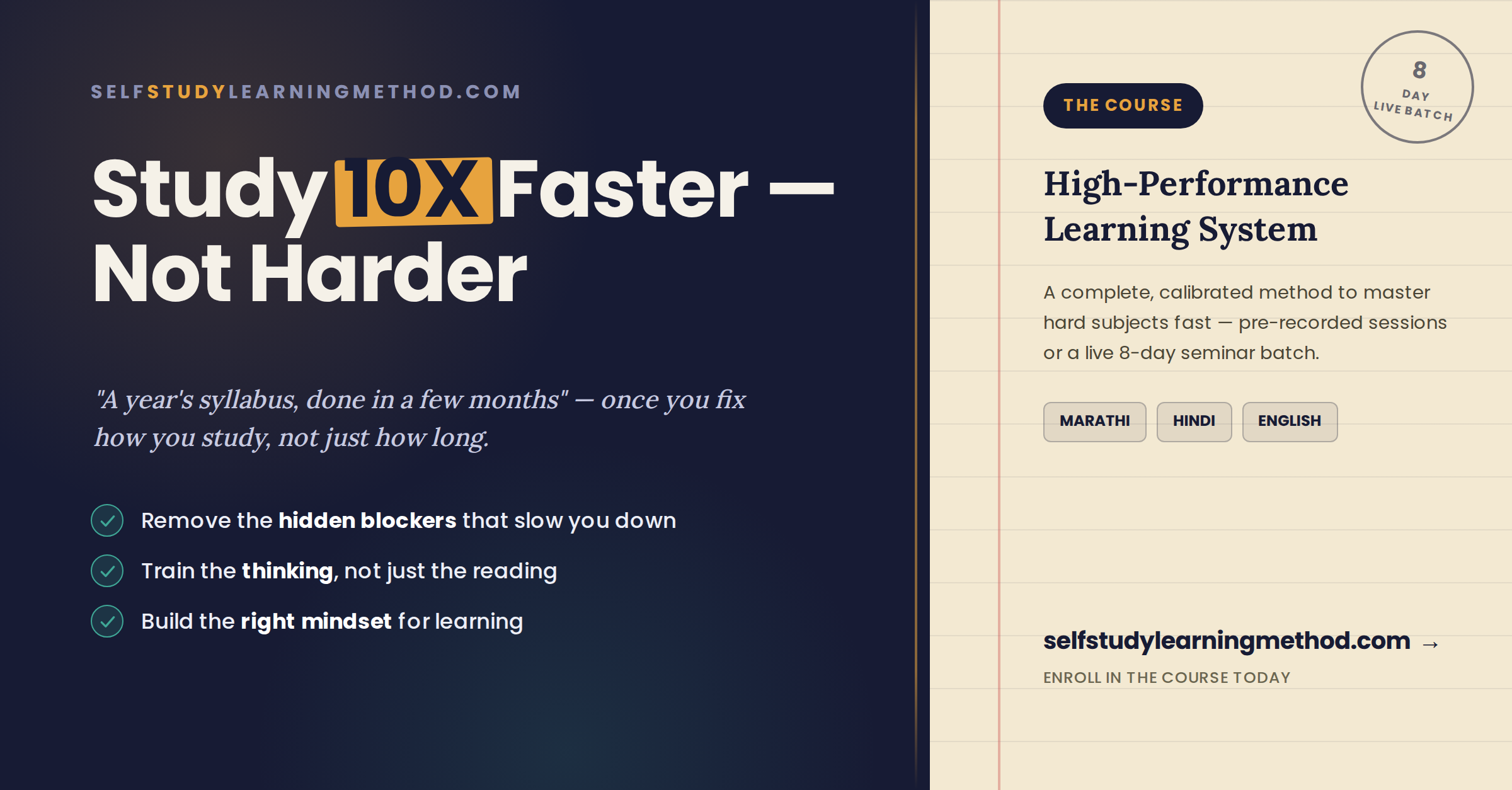
The 3-Step Formula to Study 10X Faster
To accelerate your learning exponentially, you need to master three fundamental pillars:
- Step 1: Eradicate Learning Difficulties โ Identify and tackle the 8 to 9 specific hurdles that trip you up, from poor concentration habits to complex language structures and limiting beliefs.
- Step 2: Master the Art of Thinking โ Learning is a cognitive process. By developing critical thinking (cause-and-effect reasoning) and logical intelligence, you will grasp concepts at lightning speed.
- Step 3: Cultivate the Right Mindset โ Recognize and correct the internal thoughts and mental barriers that interfere with your focus and academic attitude.
Ready to Transform Your Academic Journey?
You donโt have to figure this all out alone or waste years trial-and-erroring your way through school.
A comprehensive, high-performance learning system has been built specifically to tackle your attitude, methodology, and learning bottlenecks. Pre-seminar courses and live 8-day training batches are now available in Marathi, Hindi, and English.
Accomplish a yearโs worth of work in just a few months.
Visit the official website: SelfStudyLearningMethod
Book your course today, apply the methods, join the practice sessions, and master hard subjects fast!
9 Reasons Why Self-Study Fails and How Dr. Sandeep Kharat's Learning Methods Solve Them
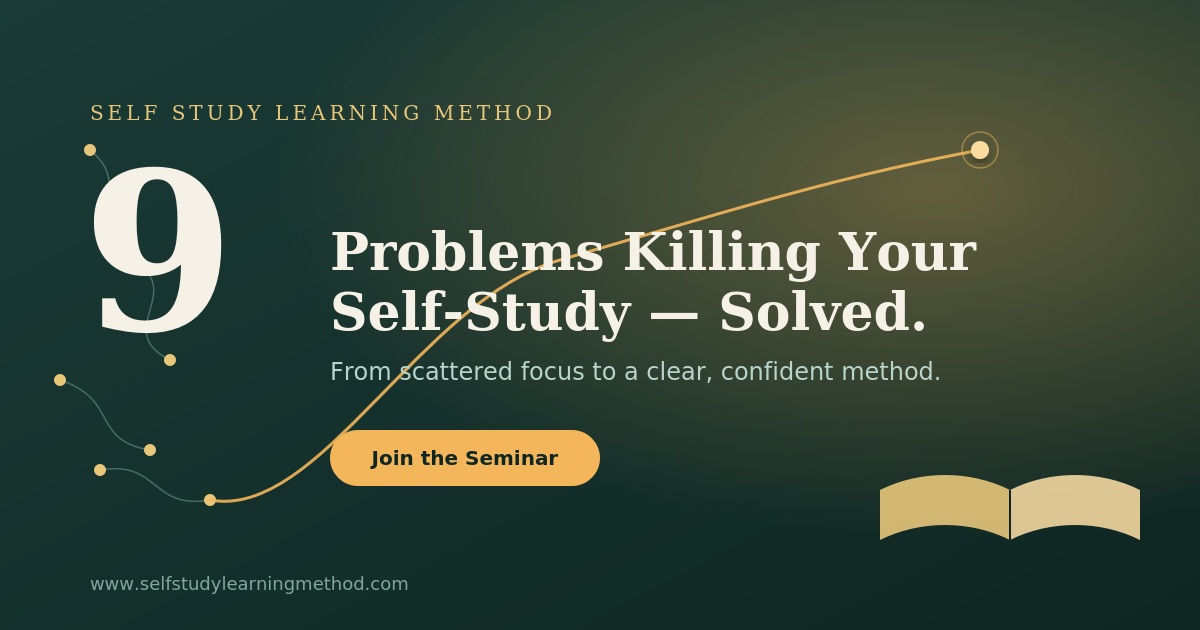
You Don't Have a 'Study Problem.' You Have 9 Problems Disguised as One.
Why self-study feels so hard โ and the one shift that makes it click.
Sit with this for a second: you open the book. You want to study. And within five minutes, something inside you quietly says โ 'not today.'
You call it a lack of interest. A lack of discipline. A lack of 'brains for this subject.'
It's none of those things.
It's actually 9 very specific, very predictable problems that hit almost every self-study learner โ usually all at once, usually in the first ten minutes of sitting down. Nobody ever separates them for you. So they pile up and feel like one giant wall called 'I can't study.'
Let's take that wall apart, brick by brick.
The 9 Problems Killing Your Self-Study Before It Starts
1. The 'Interest' Myth
You tell yourself: 'I don't have interest in this subject.' But interest isn't something you have โ it's something that builds, the moment you start understanding a topic. Waiting to 'feel interested' before you begin is like waiting to feel warm before stepping near the fire. It's backwards, and it's the single biggest myth stalling self-study learners today.
2. 'What's the Point?' Paralysis
Before you even start a page, a voice asks: 'What's the benefit of this โ for my exam, for real life?' Without a clear answer, your brain refuses to invest energy. And most learners never get a satisfying answer, so they never really start.
3. The 30-Minute Blank-Out
You finally get a free 30 minutes. And instead of studying, you spend 20 of them deciding what to study. No plan, no system โ just decision fatigue eating your only free window.
4. The Focus That Won't Arrive
You sit, you read โ and your mind still wanders. It takes forever to settle, and even when it does, it's a shallow, half-hearted focus, not the deep kind that actually absorbs information.
5. Focused, But Still Lost
Here's the cruel twist: sometimes you do focus โ and you still don't understand the concept quickly. That gap between effort and result is what quietly kills confidence faster than anything else.
6. 'This Chapter Looks Impossible'
You flip to a new chapter, see the structure, the sub-points, the sheer volume โ and your brain files it under 'complicated' before you've read a single line. That first glance decides whether you engage or give up.
7. Waiting for a Rescuer
You don't start unless a teacher or friend nudges you along. Self-study, ironically, doesn't feel self-driven at all โ it feels dependent on someone else lighting the spark every single time.
8. Doubting Your Own Mind
The moment something doesn't make sense, it stops being 'I don't understand this yet' and becomes 'maybe I'm just not intelligent enough.' One tough concept, and suddenly your whole self-image is on trial.
9. 'I Could Never Actually Use This'
Deep down, you're not confident you could apply what you're reading in real life โ let alone extend it, question it, or contribute something new to that field. So learning feels like memorizing for a test, not building real capability. And that quietly closes the door to research, innovation, or mastery before you ever got close to it.
Here's the Real Problem
None of these 9 things mean you're incapable. They mean nobody ever taught you how to study โ only what to study.
You were handed textbooks, syllabi, and deadlines. You were never handed a process. And without a process, even the sharpest mind will freeze at problem #3, doubt itself at #8, and quit at #6.
The good news? Every one of these 9 problems has a specific, learnable fix. Not motivation. Not willpower. A method.
This Is Exactly What Our Seminar Is Built to Fix
Imagine sitting down to study and, instead of that familiar wall of resistance, you have:
- A clear starting point every time โ no more wasting your 30 minutes deciding what to do.
- A way to build interest on demand, instead of waiting for it to show up.
- A system to break down 'complicated' chapters into simple, entry-friendly steps.
- Real, fast focus techniques โ not vague advice like 'just concentrate.'
- The confidence to trust your own understanding, without needing a teacher standing over your shoulder.
- A mindset shift that turns 'I might not be smart enough' into 'I just haven't learned this yet.'
- The ability to actually apply what you learn โ and eventually think beyond the textbook.
This isn't another motivational talk. It's a complete process of learning โ the missing manual nobody gave you โ paired with the right mindset to make self-study finally feel like yours.
If you've ever opened a book and closed it five minutes later, this seminar was built for exactly that moment.
๐ Join the Self Study Learning Method seminar and turn all 9 problems into 9 skills you now own.
Because the goal was never to 'try harder.' It was to finally have the right method.
Visit www.selfstudylearningmethod.com to reserve your spot.
Frequently Asked Questions about Self-Study Methods
How can I study 10x faster using self-study methods?
To study 10x faster, you must master three pillars: eradicate learning difficulties (like poor concentration), master the art of thinking (cause-and-effect reasoning), and cultivate a growth mindset that removes mental barriers. This method focuses on removing friction rather than just increasing effort.
Why do most students struggle with self-study?
Most students struggle because they were taught what to study, not how to study. Common roadblocks include the "interest myth" (waiting to feel interested), decision fatigue, shallow focus, and a lack of a structured process to break down complex chapters.
What are the three levels of deep learning?
Deep learning involves three levels: 1) Foundation (grasping core concepts), 2) Application (knowing how to use concepts in real life), and 3) Innovation (solving problems and creating new solutions where gaps exist).